

Automation in Utilities and Telecom Construction Isn’t What You Think It Is
When people hear the word automation, their minds usually go straight to robots.
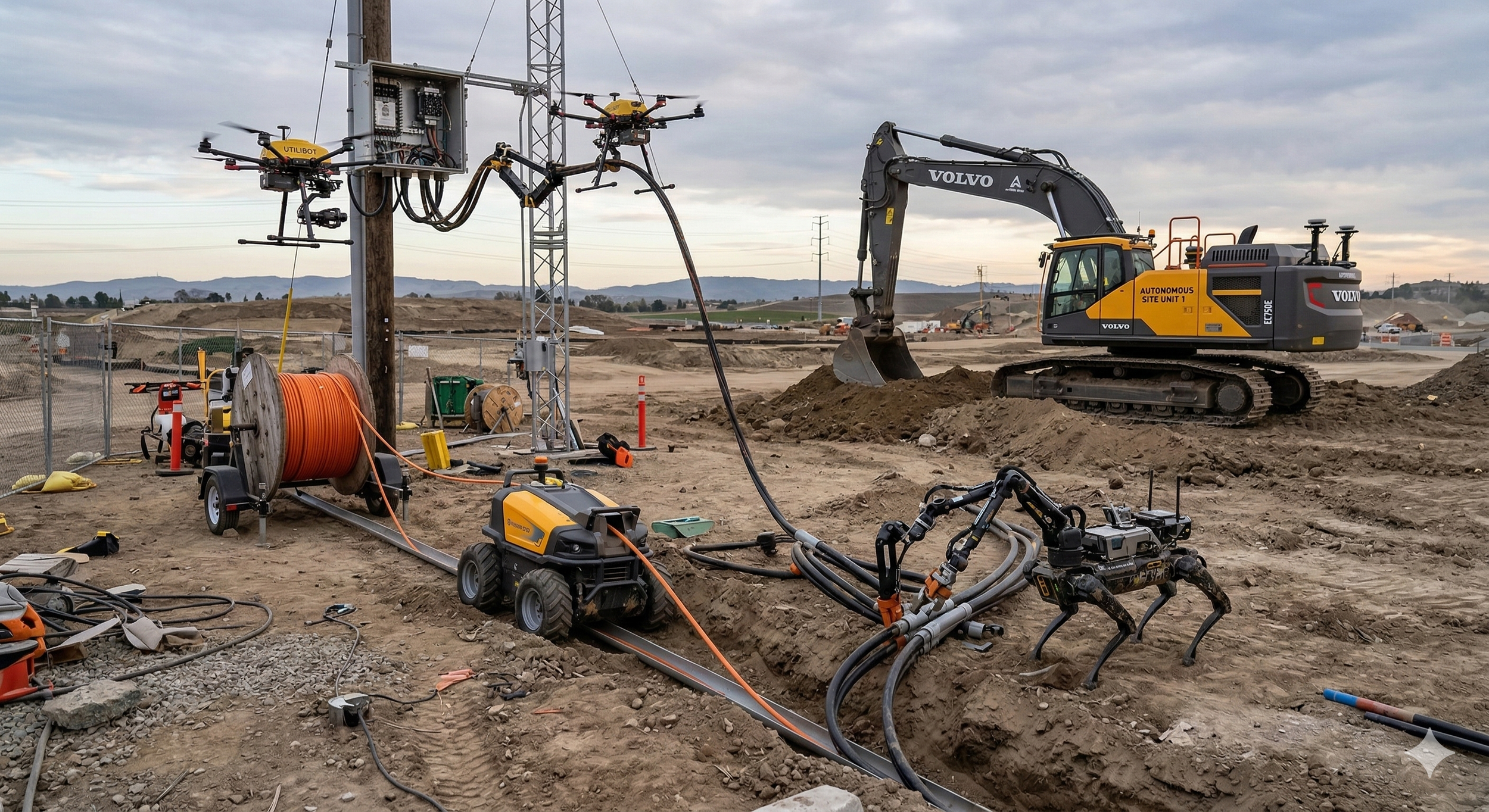
Drones inspecting power lines.
Robotic arms assembling something in a factory.
Maybe even autonomous construction equipment roaming around a job site.
And sure—those things are coming.
But that’s not the automation revolution happening right now in utilities and telecom construction.
The real shift is quieter, and frankly, far more useful.
It’s happening in the invisible plumbing of information.
The Old Way: Weekly Updates and Educated Guesses
For decades, managing large utility and telecom construction projects meant living with a certain amount of uncertainty.
Executives would ask a simple question:
How are things going out there?
And the answer would arrive a few days later in the form of a spreadsheet, a slide deck, or a carefully worded weekly report.
Project managers gathered numbers from their teams.
Superintendents summarized field conditions.
Someone compiled production metrics.
Someone else cleaned up the presentation.
Eventually, leadership got a snapshot of the project.
But by the time that snapshot arrived, it was already outdated.
An issue that started on Monday might not reach the people who could fix it until Thursday or Friday. By then, the schedule had shifted, crews had moved, and the cost of the problem had quietly grown.
No one was incompetent. It was simply the speed of information.
The Real Automation Revolution: Information Speed
Today, the tools exist to eliminate most of that delay.
Automation in utilities and telecom construction isn’t primarily about machines replacing people. It’s about systems that can capture, analyze, and respond to information in real time.
Production data can be logged directly from the field.
Dashboards update automatically.
Budgets recalculate instantly.
Schedule impacts appear the moment conditions change.
The number crunching that once took hours—or days—now happens in seconds.
And the information doesn’t just sit there waiting for someone to notice it.
Automated workflows can flag problems immediately.
A production rate drops below plan.
A crew starts burning too many hours.
Materials deliveries slip against schedule.
Instead of waiting for someone to write up the issue, the system highlights it automatically and pushes it to the people who need to know.
Sometimes it can even suggest possible responses before a human enters the conversation.
The End of Administrative Bottlenecks
One of the biggest impacts of automation isn’t on the job site—it’s in the administrative load surrounding it.
Historically, collecting more data meant creating more work.
More spreadsheets.
More reporting requirements.
More late-night updates from already overloaded project managers.
So companies learned to be selective about what they measured.
But modern automated systems flip that equation.
If the feedback loops are built correctly, the burden of capturing and analyzing information becomes almost zero. Data moves automatically from the field into systems that organize, interpret, and present it.
Administrative tasks that once required hours of human effort simply… disappear.
Measure Everything (If You Can Trust It)
This changes the philosophy of management.
Instead of asking “What can we realistically track?” the question becomes:
“What would we like to know?”
Because when the system is built properly, you no longer have to be stingy about measurement.
You can measure production.
Crew performance.
Material flow.
Schedule variance.
Cost drift.
All of it.
And more importantly, you can talk to your data directly—asking questions and getting answers in seconds instead of waiting for the next reporting cycle.
There’s just one catch.
The system only works if the data is right.
Automation doesn’t magically fix bad inputs. In fact, it amplifies them. Bad data moves through automated systems just as fast as good data does.
So while automation reduces administrative friction, it increases the importance of accurate data capture at the source.
The Quiet Transformation
The future of utilities and telecom construction may very well include autonomous equipment and robotic job sites.
But the transformation already underway is less dramatic and far more powerful.
It’s the shift from slow, human-routed information to continuous, automated awareness of what is actually happening in the field.
And once that feedback loop exists, something remarkable happens.
You stop managing projects by guessing.
You start managing them by knowing.